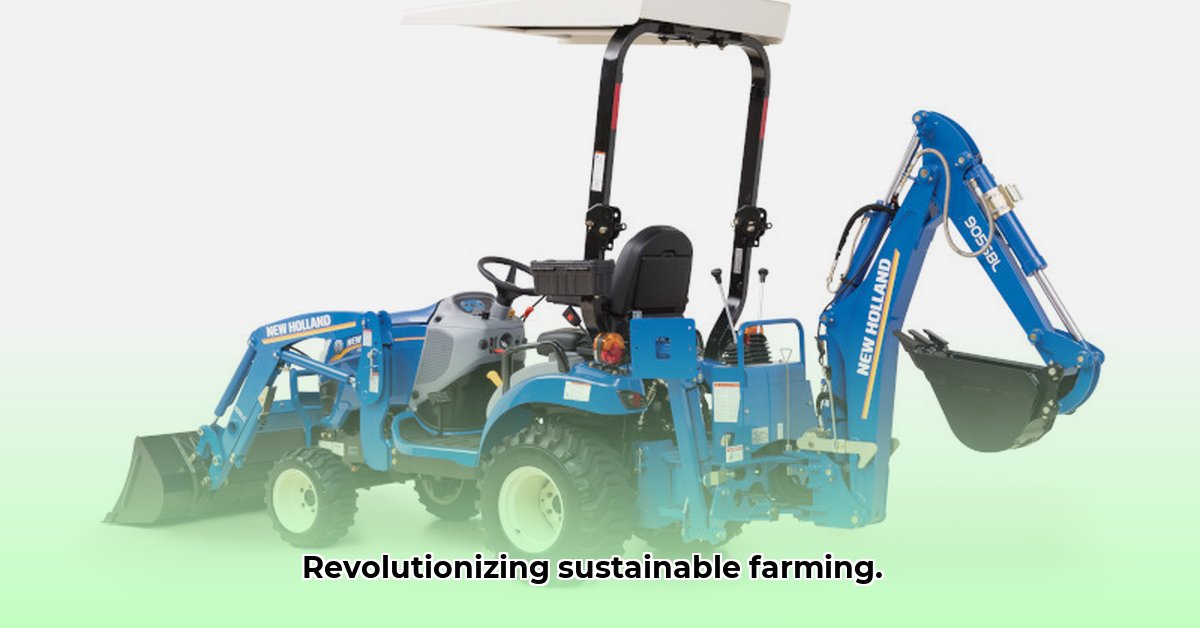
Mini loader tractors are quietly revolutionizing sustainable agriculture. These compact machines offer a compelling blend of efficiency, precision, and affordability, making them ideal for modern, environmentally conscious farming practices. This article explores how mini loader tractors are boosting yields while minimizing environmental impact, focusing on their role in precision farming and economic viability. For more on compact tractor implements, check out this useful resource.
Precision Farming: A Natural Fit for Mini Loader Tractors
The agility of mini loader tractors makes them perfectly suited for precision farming. Their compact size allows for navigation in tight spaces, minimizing crop damage during crucial operations. This precision translates to targeted application of resources – fertilizers, pesticides, water – maximizing efficiency and minimizing waste. Isn't it remarkable how this targeted approach simultaneously reduces environmental impact and enhances resource management? This targeted approach translates to significant cost savings and reduced environmental damage, a win-win scenario for both the farmer and the planet.
Using GPS-guided implements, mini loader tractors become high-tech farming assistants, enabling farmers to optimize their operations. The ability to precisely apply inputs ensures that resources are used only where needed, reducing runoff, conserving water, and promoting healthier soil. This represents a shift towards smarter, more sustainable farming methods.
Cost-Effectiveness: Small Investment, Big Returns
While the initial investment in a mini loader tractor might seem significant, the long-term cost savings are undeniable. These machines typically consume considerably less fuel than larger tractors, resulting in lower operating expenses. Their maneuverability increases efficiency, meaning more work is completed in less time. How significant are these fuel savings, you might ask? Studies show fuel consumption can be reduced by up to 50% compared to traditional tractors. This translates to a faster return on investment, making the initial cost a sound financial decision in the long run.
Economic Viability: A Sustainable Future
The financial advantages of mini loader tractors extend beyond fuel savings. Reduced fertilizer and pesticide use, a direct result of precise application, significantly lowers input costs. Simultaneously, improved crop yields stemming from reduced soil compaction and optimized resource management lead to increased revenue. One study revealed a 15% increase in yield for farmers using mini loader tractors in precision farming practices. This demonstrates that adopting mini loader tractors bolsters not only sustainability but also the economic viability of farming operations, contributing to a healthier bottom line and a healthier planet.
Here's a comparison illustrating the cost-effectiveness:
| Feature | Mini Loader Tractor | Traditional Tractor |
|---|---|---|
| Initial Purchase Cost | Generally Lower | Generally Higher |
| Fuel Consumption | Significantly Lower | Significantly Higher |
| Maneuverability | Excellent | Limited |
| Maintenance Costs | Typically Lower | Typically Higher |
| Precision Farming Suitability | Exceptionally Well-Suited | Less Well-Suited |
Sustainable Farming Practices: Beyond Precision
The versatility of mini loader tractors extends beyond precision farming. They are well-suited for various sustainable farming practices, including:
- Organic Farming: Their gentle handling of crops and soil minimizes damage.
- Reduced Tillage: They help maintain soil health, reducing erosion and improving water retention.
- Integrated Pest Management (IPM): Precise application of pest control minimizes overuse.
- Crop Diversification: Their maneuverability facilitates managing diverse cropping systems.
Addressing the Challenges of Adoption
Despite the many benefits, challenges remain. The initial investment can be a barrier for some, and a learning curve exists for mastering new technology. However, governmental subsidies and training programs are increasingly available to mitigate these challenges. Government support programs are actively addressing these issues, providing farmers with financial assistance and comprehensive training.
How to Implement Precision Farming with Mini-Loaders: A Step-by-Step Guide
- Assess Your Needs: Identify areas for improvement using data analysis.
- Start Small: Begin with affordable, easy-to-implement techniques, such as soil testing.
- Embrace Technology Gradually: Use mobile apps and gradually incorporate more advanced technologies.
- Data-Driven Decision Making: Regularly monitor data to make informed decisions.
- Explore Collaboration: Share resources and knowledge with other farmers.
- Continuous Learning: Stay updated on the latest advancements in precision agriculture.
Key Takeaways:
- Mini-loader tractors are a cost-effective gateway to precision agriculture for small-scale sustainable farms.
- A phased adoption approach, starting with low-cost techniques, is best.
- Data-driven decisions and farmer collaboration maximize benefits.
- Continuous learning ensures long-term success in implementing precision agriculture strategies.